
Table of Contents
- What Makes Dooars Special for Eco-Tourism?
- Prime Eco-Tourism Destinations in Dooars
- Gorumara National Park: The Crown Jewel
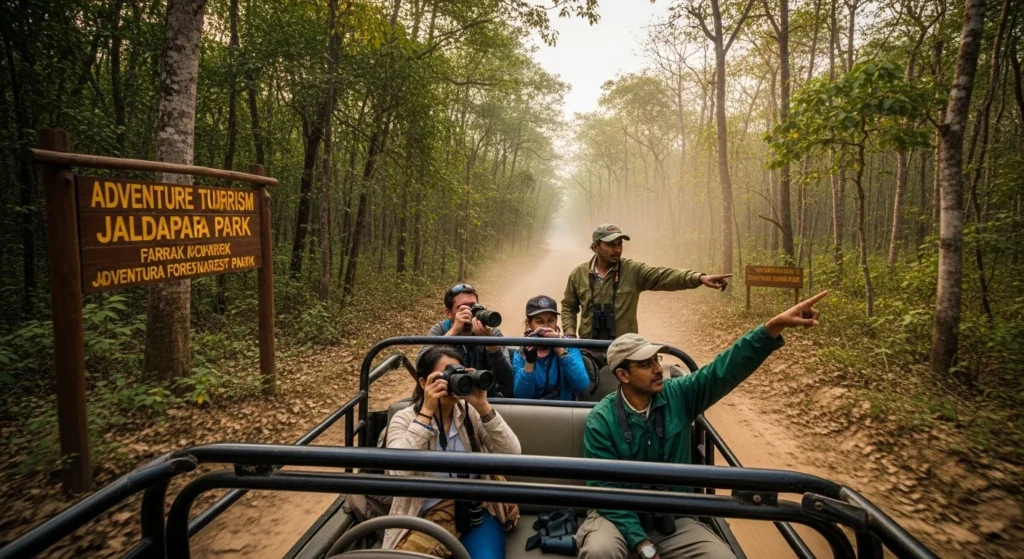
- Jaldapara National Park: Rhino Haven
- Buxa Tiger Reserve: The Wild Frontier
- Offbeat Eco-Tourism Gems
- Jhalong: The Hidden Valley
- Bindu: Where Rivers Meet
- Suntalekhola: The Orange Valley
- Which Month is Best for Dooars?
- What Are the 7 Viewpoints of Dooars?
- Which Place is Known as the Queen of Dooars?
- Sustainable Tourism Practices in Dooars
- Planning Your Eco-Tourism Adventure
- Wildlife Viewing Tips
- Cultural Experiences in Dooars
- Responsible Travel Guidelines
- Best Photography Spots
- Seasonal Wildlife Calendar
- Hidden Gems for Advanced Eco-Tourists
What type of tourism is ecotourism? Picture this: You’re discovering the answer while sipping your morning tea, watching elephants graze peacefully in their natural habitat while colorful hornbills dance overhead. Eco-tourism is a responsible travel approach that focuses on visiting natural areas while conserving the environment and improving the well-being of local communities – and this magical scene isn’t a dream, it’s just another day in Dooars, India’s best-kept secret for sustainable travel enthusiasts.
It’s about experiencing nature authentically while leaving minimal impact – think wildlife watching, sustainable accommodations, and supporting local cultures.
In Dooars, this philosophy comes alive through pristine national parks, community-based tourism initiatives, and conservation projects that you can actively participate in. It’s not just about seeing animals; it’s about becoming part of a larger conservation story.
What Makes Dooars Special for Eco-Tourism?
The Dooars region, stretching across northern West Bengal and southern Assam, is like nature’s own masterpiece. The name “Dooars” literally means “doors” in Bengali – and trust me, it truly is the gateway to some of India’s most spectacular wilderness.
What is famous in Dooars?
Dooars isn’t just another hill station – it’s a biodiversity hotspot that’ll make any nature lover’s heart skip a beat. Here’s what makes this region absolutely irresistible:
- Wildlife Sanctuaries: Home to one-horned rhinoceros, Asian elephants, and over 350 bird species
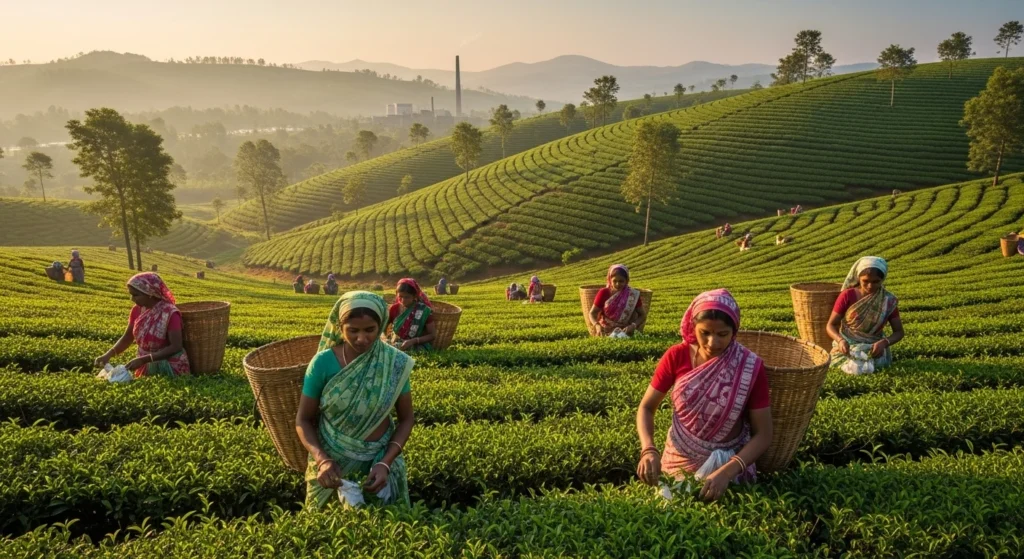
- Tea Gardens: Rolling green carpets of tea estates that produce some of India’s finest brews
- River Adventures: Crystal-clear rivers perfect for angling and riverside camping
- Tribal Culture: Rich heritage of indigenous communities with unique traditions
- Dense Forests: Ancient woodlands harboring rare orchids and medicinal plants
Prime Eco-Tourism Destinations in Dooars
Gorumara National Park: The Crown Jewel
If Dooars had a crown, Gorumara would be its brightest jewel. This 80 square kilometer paradise is famous for its successful rhinoceros conservation program. I still remember my first elephant safari at Gorumara – watching a mother rhino with her calf was pure magic.
Why Gorumara Rocks:
- One-horned Rhinoceros: Over 50 individuals call this place home
- Elephant Herds: Regular sightings of majestic elephant families
- Birdwatcher’s Paradise: Over 195 bird species including the rare Bengal Florican
- Sustainable Tourism: Well-managed eco-tourism practices
The park offers both jungle safaris and elephant rides, but I’d recommend the jungle safari for a more authentic experience.
Jaldapara National Park: Rhino Haven
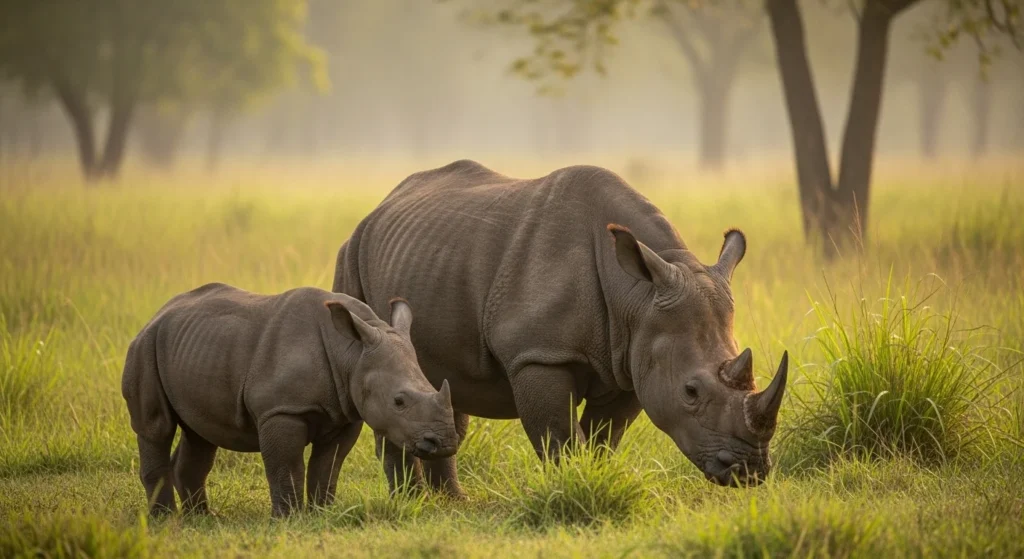
Just 20 kilometers from Gorumara lies Jaldapara, another rhinoceros sanctuary that’s equally mesmerizing. The park’s grasslands and riverine forests create a perfect habitat for these magnificent creatures.
Jaldapara Highlights:
- Rhino Population: Home to nearly 240 one-horned rhinoceros
- Diverse Wildlife: Leopards, wild boars, and sambars roam freely
- River Torsa: Scenic river adding to the park’s natural beauty
- Eco-Lodges: Sustainable accommodation options
Don’t miss the jeep safari experience – it’s the best way to explore the park’s diverse ecosystems.
Buxa Tiger Reserve: The Wild Frontier
Spanning 760 square kilometers, Buxa Tiger Reserve is where serious wildlife enthusiasts find their calling. Though tiger sightings are rare, the reserve offers incredible biodiversity and historical significance.
Buxa’s Unique Features:
- Historical Fort: Ancient Buxa Fort with colonial history
- Butterfly Paradise: Over 236 butterfly species
- Medicinal Plants: Rich flora with therapeutic properties
- Tribal Villages: Authentic cultural experiences with local communities
Offbeat Eco-Tourism Gems
Jhalong: The Hidden Valley
Tucked away in the Kalimpong district, Jhalong is where the Jaldhaka River creates a symphony of sounds. This offbeat destination offers pristine natural beauty without the crowds.
Jhalong’s Eco-Attractions:
- River Jaldhaka: Crystal-clear waters perfect for angling
- Cardamom Plantations: Organic spice gardens
- Hanging Bridge: Scenic wooden bridge over the river
- Peaceful Atmosphere: Perfect for digital detox
Bindu: Where Rivers Meet
At the confluence of Jaldhaka and Bindu rivers, this tiny hamlet offers incredible tranquility. The cardamom gardens and orange orchards create a fragrant paradise.
Suntalekhola: The Orange Valley
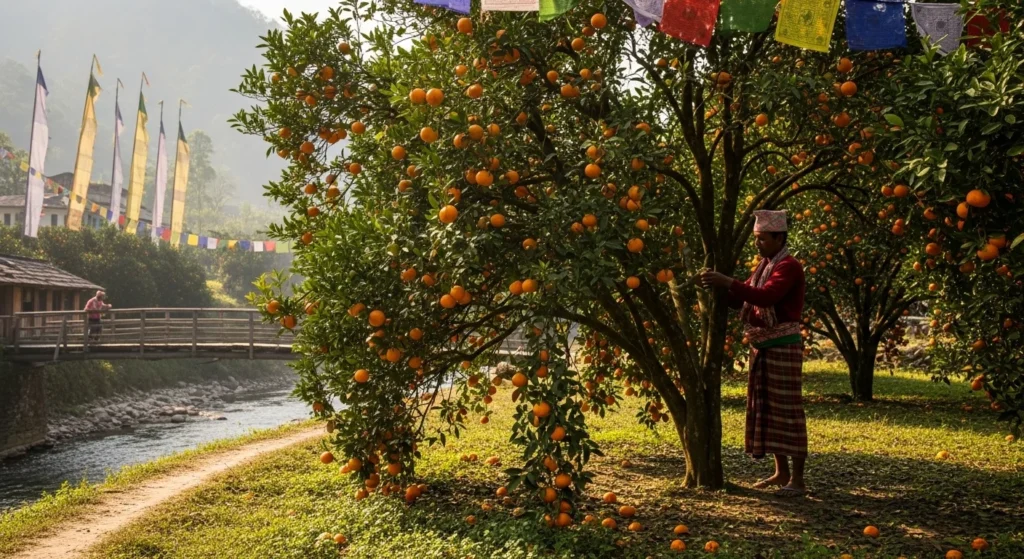
Named after the orange trees that dot the landscape, Suntalekhola is a slice of heaven. The Murti River flows through this valley, creating perfect spots for riverside camping.
Which Month is Best for Dooars?
Timing is everything in Dooars, and I’ve learned this the hard way. After visiting in both monsoon and winter, I can confidently say that each season offers unique experiences.
Peak Season (October – March)
Weather: Pleasant temperatures ranging from 10°C to 25°C Wildlife: Animals are most active and visible Advantages: Clear skies, comfortable trekking conditions Bookings: Advance reservations essential
Summer Season (April – June)
Weather: Warm but bearable (20°C to 30°C) Wildlife: Animals frequent water sources, making sightings easier Advantages: Lush green landscapes, fewer crowds Best For: Photography enthusiasts and budget travelers
Monsoon Season (July – September)
Weather: Heavy rainfall, humid conditions Wildlife: Parks may remain closed Advantages: Spectacular waterfalls, rejuvenated forests Note: Not ideal for wildlife viewing
My Recommendation: Plan your visit between November and February for the perfect balance of pleasant weather and excellent wildlife sightings.
What Are the 7 Viewpoints of Dooars?
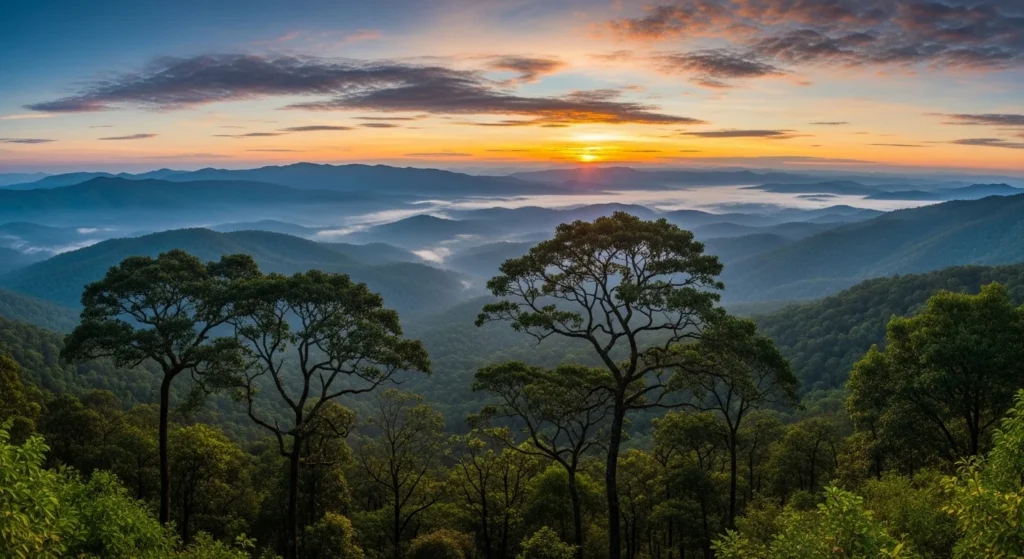
Dooars offers spectacular viewpoints that showcase the region’s diverse landscapes. Here are the seven must-visit vantage points:
| Viewpoint | Location | Best Feature | Best Time to Visit |
| Lataguri Viewpoint | Near Gorumara | Panoramic forest views | Early morning |
| Jhalong Viewpoint | Jhalong Valley | River confluence sight | Sunset |
| Bindu Dam Viewpoint | Bindu | Hydro-electric dam views | Daytime |
| Suntalekhola Viewpoint | Suntalekhola | Orange orchards vista | Dawn/dusk |
| Buxa Fort Viewpoint | Buxa Tiger Reserve | Historical fort ruins | Afternoon |
| Jayanti Viewpoint | Buxa hills | Mahakal cave views | Morning |
| Rajabhatkhawa Viewpoint | Buxa entrance | Forest canopy views | Early morning |
Each viewpoint offers unique perspectives of Dooars’ natural beauty, from dense forests to flowing rivers and distant mountain ranges.
Which Place is Known as the Queen of Dooars?
Lataguri proudly holds the title of “Queen of Dooars,” and honestly, it deserves every bit of this royal recognition. Located at the gateway to Gorumara National Park, Lataguri combines natural beauty with excellent accessibility.
Why Lataguri Reigns Supreme:
- Strategic Location: Perfect base for exploring multiple parks
- Accommodation: Wide range of eco-friendly hotels and resorts
- Connectivity: Well-connected by road and rail
- Activities: Elephant rides, jungle safaris, and nature walks
- Local Culture: Rich tribal heritage and warm hospitality
The town’s main street buzzes with activity, offering everything from local handicrafts to organic honey. It’s where urban comfort meets wilderness adventure.
Sustainable Tourism Practices in Dooars
Eco-tourism in Dooars isn’t just a buzzword – it’s a way of life. The region has embraced sustainable practices that benefit both nature and local communities.
Community-Based Tourism
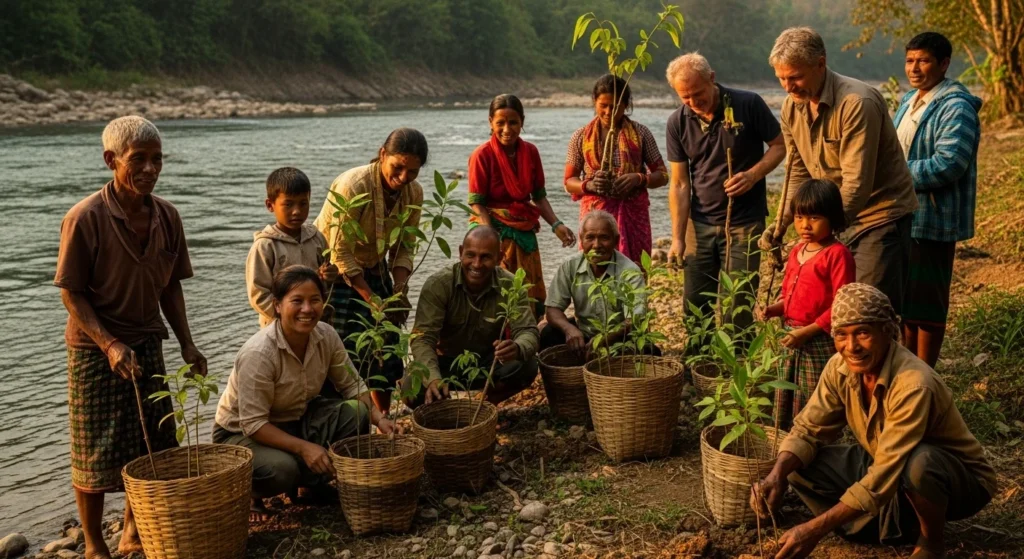
Local communities actively participate in tourism activities, from guiding services to homestays. This approach ensures that tourism revenue directly benefits the people who call Dooars home.
Community Initiatives:
- Tribal Homestays: Authentic cultural experiences
- Local Guides: Indigenous knowledge sharing
- Handicraft Cooperatives: Supporting traditional crafts
- Organic Farming: Sustainable agriculture practices
Conservation Programs For Eco Tourism In Dooars
Several organizations work tirelessly to protect Dooars’ unique ecosystems:
- Wildlife Conservation: Anti-poaching initiatives and habitat restoration
- Forest Protection: Afforestation drives and sustainable logging
- River Conservation: Clean water initiatives and pollution control
- Education Programs: Environmental awareness in schools
Planning Your Eco-Tourism Adventure
How to Reach Dooars
By Air: Bagdogra Airport (70 km from Lataguri) By Train: New Jalpaiguri Railway Station (60 km from Lataguri) By Road: Well-connected highways from Kolkata (650 km)
Where to Stay
Choose eco-friendly accommodations that follow sustainable practices:
- Forest Lodges: Government-run eco-lodges within park premises
- Eco-Resorts: Private properties with green certifications
- Tribal Homestays: Authentic community-based accommodations
- Sustainable Hotels: Properties following eco-friendly practices
What to Pack For Wildlife Tourism In Dooars
Essential Items:
- Comfortable trekking shoes
- Lightweight, earth-colored clothing
- Binoculars for wildlife viewing
- Camera with extra batteries
- Insect repellent and sunscreen
- Reusable water bottle
Pro Tip: Pack light but don’t forget your sense of adventure!
Wildlife Viewing Tips
After multiple trips to Dooars, I’ve learned some insider secrets for successful wildlife viewing:
Best Practices:
- Early Morning Safaris: Animals are most active during dawn
- Patience is Key: Wildlife doesn’t follow schedules
- Silence is Golden: Avoid loud conversations during safaris
- Respect Boundaries: Maintain safe distances from animals
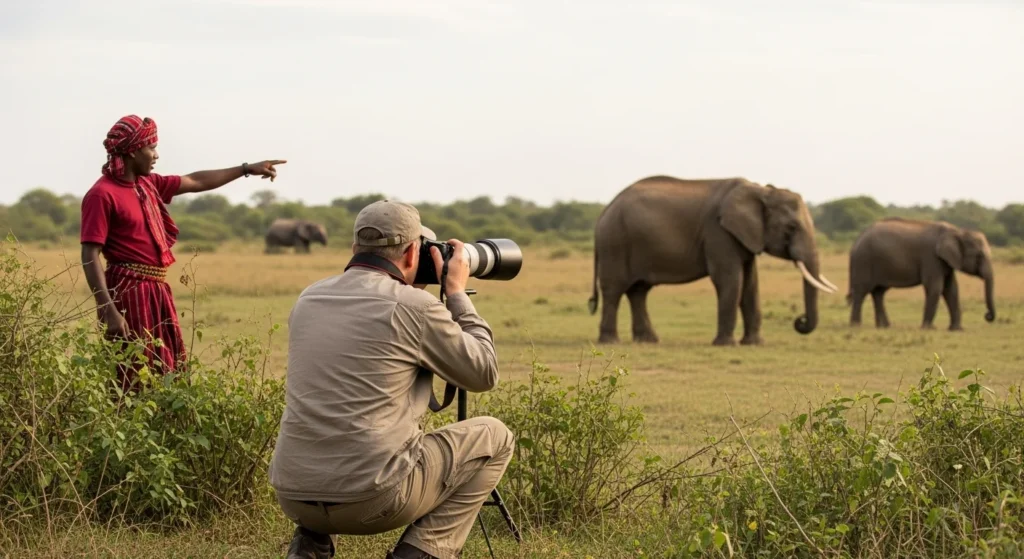
- Local Expertise: Always listen to your guide’s advice
Photography Ethics:
- No Flash: Disturbs animals and may cause accidents
- Natural Behavior: Don’t try to provoke reactions for photos
- Respect Nesting: Keep distance from nesting areas
- Share Responsibly: Avoid posting location details of rare species
Cultural Experiences in Eco Adventure In Dooars
Eco-tourism in Dooars extends beyond wildlife – it’s about connecting with local cultures and traditions.
Tribal Communities
The region is home to several indigenous communities, each with unique customs and lifestyles:
Rajbongshi Community:
- Traditional bamboo crafts
- Folk music and dance
- Organic farming practices
- Herbal medicine knowledge
Adivasi Communities:
- Forest-based livelihoods
- Traditional honey collection
- Seasonal festivals
- Oral storytelling traditions
Local Festivals
Participating in local festivals offers authentic cultural experiences:
- Kali Puja: Celebrated with great enthusiasm
- Durga Puja: Community celebrations in tea gardens
- Pohela Boishakh: Bengali New Year festivities
- Harvest Festivals: Celebrating agricultural abundance
Responsible Travel Guidelines
To ensure your visit contributes positively to Dooars’ conservation efforts:
Environmental Responsibility:
- Leave No Trace: Pack out all trash
- Water Conservation: Use water sparingly in dry regions
- Energy Efficiency: Choose accommodations with renewable energy
- Plastic-Free: Carry reusable items and avoid single-use plastics
Cultural Sensitivity Eco Tourism In Dooars:
- Respect Local Customs: Dress modestly and follow local guidelines
- Support Local Economy: Buy from local artisans and restaurants
- Learn Basic Phrases: Simple Bengali greetings go a long way
- Ask Permission: Before photographing people or private property
Traveler’s Tale: A Transformative Experience
“I arrived in Dooars as a stressed-out software engineer from Bangalore, desperately needing a break from city life. What I found was so much more than just a vacation. During my stay at a tribal homestay in Jhalong, I learned about sustainable living practices that completely changed my perspective on consumption and waste. The highlight was participating in a community-led conservation project to plant native trees along the Jaldhaka River. Six months later, I’ve adopted zero-waste practices at home and even started a weekend volunteer program for urban reforestation. Dooars didn’t just give me a holiday – it gave me a new purpose.” – Priya Sharma, Bangalore
Best Photography Spots
For those looking to capture Dooars’ natural beauty:
Sunrise Locations:
- Lataguri Forest: Golden light filtering through trees
- Jhalong River: Misty morning reflections
- Suntalekhola Valley: Orange orchards bathed in morning light
Wildlife Photography:
- Gorumara Grasslands: Perfect for rhino photography
- Jaldapara Watchtowers: Elevated wildlife viewing
- Buxa Forest: Diverse bird species and butterflies
Landscape Photography:
- Bindu Dam: Dramatic water and mountain views
- Jayanti Hills: Panoramic valley vistas
- Tea Garden: Rolling green carpets at golden hour
Seasonal Wildlife Calendar
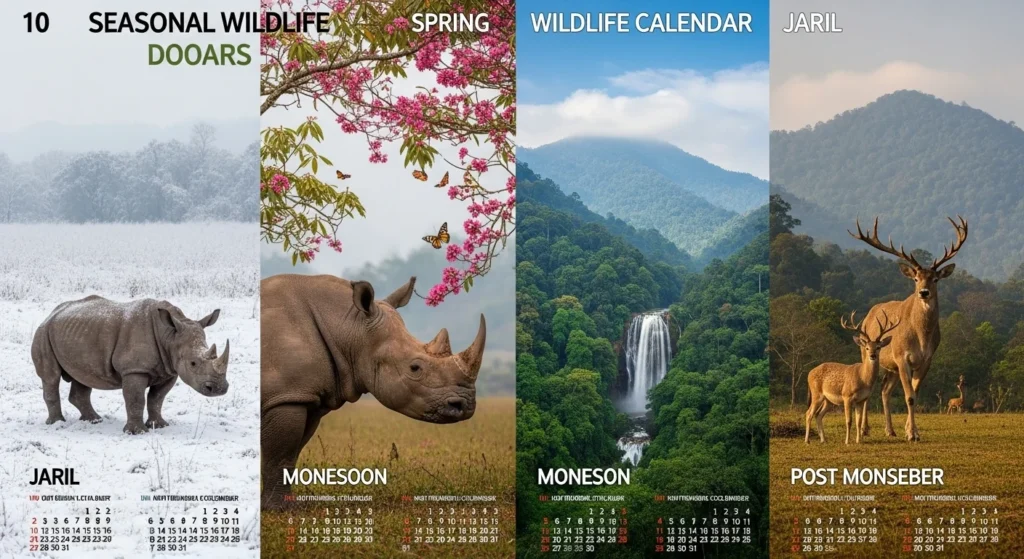
Understanding wildlife patterns enhances your ecotourism experience:
Winter (December – February)
- Elephants: Large herds gather near water sources
- Rhinos: Most active during cooler hours
- Birds: Migratory species arrive, peak bird watching season
- Leopards: Occasional sightings in early morning
Spring (March – May)
- Butterflies: Peak season for butterfly spotting
- Flowering Plants: Orchids and rhododendrons bloom
- Young Animals: Baby animals with mothers
- Extended Daylight: Longer safari timings possible
Post-Monsoon (October – November)
- Lush Landscapes: Rejuvenated forests and grasslands
- Active Wildlife: Animals emerge after monsoon shelter
- Clear Skies: Perfect for photography and trekking
- Comfortable Weather: Ideal for outdoor activities
Hidden Gems for Advanced Eco-Tourists
For those seeking Darjeeling’s hidden gems and beyond:
Chapramari Wildlife Sanctuary
A lesser-known sanctuary offering intimate wildlife experiences without crowds.
Neora Valley National Park
High-altitude ecosystem with rare red pandas and diverse orchid species.
Raimatang
Remote village perfect for cultural immersion and traditional craft learning.
Paren
Pristine river valley ideal for camping and trout fishing.
Conclusion: Your Eco-Tourism Adventure Awaits
Dooars isn’t just a destination – it’s a transformative experience that connects you with nature, culture, and yourself. Whether you’re tracking rhinoceros in Gorumara, learning traditional crafts in tribal villages, or simply sitting by the Jaldhaka River listening to its eternal song, every moment in Dooars contributes to a larger conservation story.
The region’s commitment to sustainable tourism ensures that future generations will inherit the same pristine wilderness that captivates us today. By choosing eco-tourism in Dooars, you’re not just taking a vacation – you’re becoming part of a movement that values conservation, community, and conscious travel.
Ready to embark on your eco-tourism adventure in Dooars? Start planning your sustainable journey today. Book accommodations that support local communities, choose responsible tour operators, and prepare for experiences that will change your perspective on travel forever.
The doors to Dooars are always open – the question is, are you ready to walk through them?
Don’t wait for the perfect moment – create it. Book your eco-tourism adventure in Dooars today and discover why this hidden gem is India’s best-kept secret for sustainable travel. Contact local ecotourism operators, choose community-based accommodations, and join the growing movement of conscious travelers who believe that the best journeys leave only footprints and take only memories.
Your Dooars adventure starts with a single step – take it today!
If you want to know more about sustainable eco tourism in the dooars, read this

TRAVEL SITE Read More LATEST POSTS Eco-Tourism in Dooars: Your Gateway to Sustainable Adventures What type of tourism is ecotourism? Picture this: You’re discovering the answer while sipping your morning… Read More Travel Boutique Online: Your Gateway to Personalized Adventures Travel boutique online represents the future of personalized travel planning—a sophisticated digital… Read More Sailing […]
A majestic one-horned rhino at dawn in Gorumara’s misty grasslands. This conservation success story is what makes every early morning safari worth it! Gorumara National…
Table of Contents Why Vagamon Adventure Park Should Be Your Next Adventure Destination Unmissable Thrills: Top Activities at Vagamon Adventure Park Walk on Air: India’s…
Discover the untamed beauty of Hemis National Park, India’s largest national park, home to the elusive snow leopard and breathtaking Himalayan landscapes. Table of Contents…
This document provides an extensive guide to India’s top 10 largest national parks, highlighting their critical role in biodiversity conservation and eco-tourism. It details unique ecosystems, flagship wildlife species, and conservation challenges for each park, from the high-altitude Hemis National Park to the mangrove forests of Sundarbans. The text also offers practical advice for planning wildlife safaris, emphasizing sustainable tourism practices and the future of conservation in India. Ultimately, it showcases these parks as vital havens for endangered species and transformative destinations for visitors.
This document provides an extensive guide to India’s top 10 largest national parks, highlighting their critical role in biodiversity conservation and eco-tourism. It details unique ecosystems, flagship wildlife species, and conservation challenges for each park, from the high-altitude Hemis National Park to the mangrove forests of Sundarbans. The text also offers practical advice for planning wildlife safaris, emphasizing sustainable tourism practices and the future of conservation in India. Ultimately, it showcases these parks as vital havens for endangered species and transformative destinations for visitors.
Table of Contents Why Dooars is a Trekker’s Paradise You’ve Never Heard Of Top Dooars Trekking Destinations That Will Steal Your Heart Buxa Fort and…
Buxa Tiger Reserve in West Bengal offers incredible wildlife safaris, historic fort treks, and riverside camping. Located in Alipurduar district, this 760-square-kilometer reserve hosts Bengal…
Pingback: Buxa Tiger Reserve: A Wildlife Enthusiast's Dream
This article serves as a travel guide to offbeat destinations near Jaldapara in the Dooars region, focusing on authentic experiences away from typical tourist crowds. It highlights numerous locations, from wildlife-rich forests like Chilapata and Buxa Tiger Reserve to serene villages, river circuits, and cultural sites like Totopara, home to the Toto tribe. The text emphasizes the effort required to reach these less-traveled spots, framing this effort as integral to genuine discovery and respectful interaction with local communities and nature. Practical advice on logistics, safety, and responsible tourism is also provided for adventurers seeking unique encounters with wilderness, history, and local culture
“Golden hour magic at Tiger Hill—where Kanchenjunga puts on a show you’ll never forget.” Introduction Looking for the best tourist places in North Bengal? Then…
Table of ContentsIntroductionQuick Overview: Where is Manas National Park?By Air: Flying to Manas National ParkGuwahati Airport to Manas National ParkBy Train: Railway Routes to ManasBarpeta…
“Experience the perfect 7-day Dooars journey through pristine forests, wildlife sanctuaries, and scenic tea estates” Introduction Planning a 7 day Dooars itinerary changed everything for…
“The picturesque train route from Kolkata to Dooars offers stunning views of North Bengal’s tea gardens and mountains” Table of ContentsIntroductionQuick Overview: Distance and Travel…
‘ Table of ContentsIntroductionWhy Dooars Wildlife Makes This Region a Paradise You Can’t MissDooars Wildlife: Mammals You Can’t MissIndian One-Horned RhinocerosAsian ElephantIndian Gaur (Indian Bison)LeopardBengal…
Can you be more specific about the content of your article? After reading it, I still have some doubts. Hope you can help me.
I don’t think the title of your article matches the content lol. Just kidding, mainly because I had some doubts after reading the article.
Halfway through reading I knew this would be one to bookmark, and a look at quarknebula confirmed that early intuition, when bookmark intent forms before finishing a post you know the writing has cleared a quality bar that most content fails to clear and this site has cleared it on multiple visits already.
One of the more thoughtful posts I have read recently on this topic, and a stop at palettemauve added even more weight to that impression, this is genuinely good content that holds its own against far better known sites in the same space without trying to imitate any of them at all which I appreciate.
Now feeling confident enough in this site to use it as a reference point for evaluating others on the same topic, and a look at needlematrix continued the comparison friendly quality, sites that serve as quality benchmarks for their topic are precious and this one has clearly become a benchmark for me on this particular subject area.
Now thinking about whether the writer might publish a longer form work I would buy, and a look at elffleet suggested the same depth would translate, content that makes me want to pay for related work in other formats is content that has earned commercial trust as well as attention trust and this site has both clearly.
Honestly this hits the sweet spot between detail and brevity, no rambling and no shortcuts, and a quick visit to startyournextjourney kept that going across the related pages, the kind of place that respects your attention without trying to grab it through cheap tactics or attention seeking design choices that get tired fast.
Solid post, the structure is easy to follow and the language stays simple even when the topic gets a bit more involved, and a look at exploreideaswithpurpose kept that same standard going, so I left feeling like the time spent here was actually worth something for once which is rare lately.
Once I trust a site this much I tend to read everything they publish and that is the trajectory I am on with this one, and a stop at buildfocusedprogress confirmed the trajectory, the rare progression from interested reader to comprehensive reader is something only certain sites earn and this one is earning that progression rapidly.
Thank you for keeping the writing honest and the points easy to verify against your own experience, and a stop at learnandexecuteclearly reflected the same approach, no exaggeration just steady useful content that I can take with me into my own work without second guessing every sentence I happen to read here.